

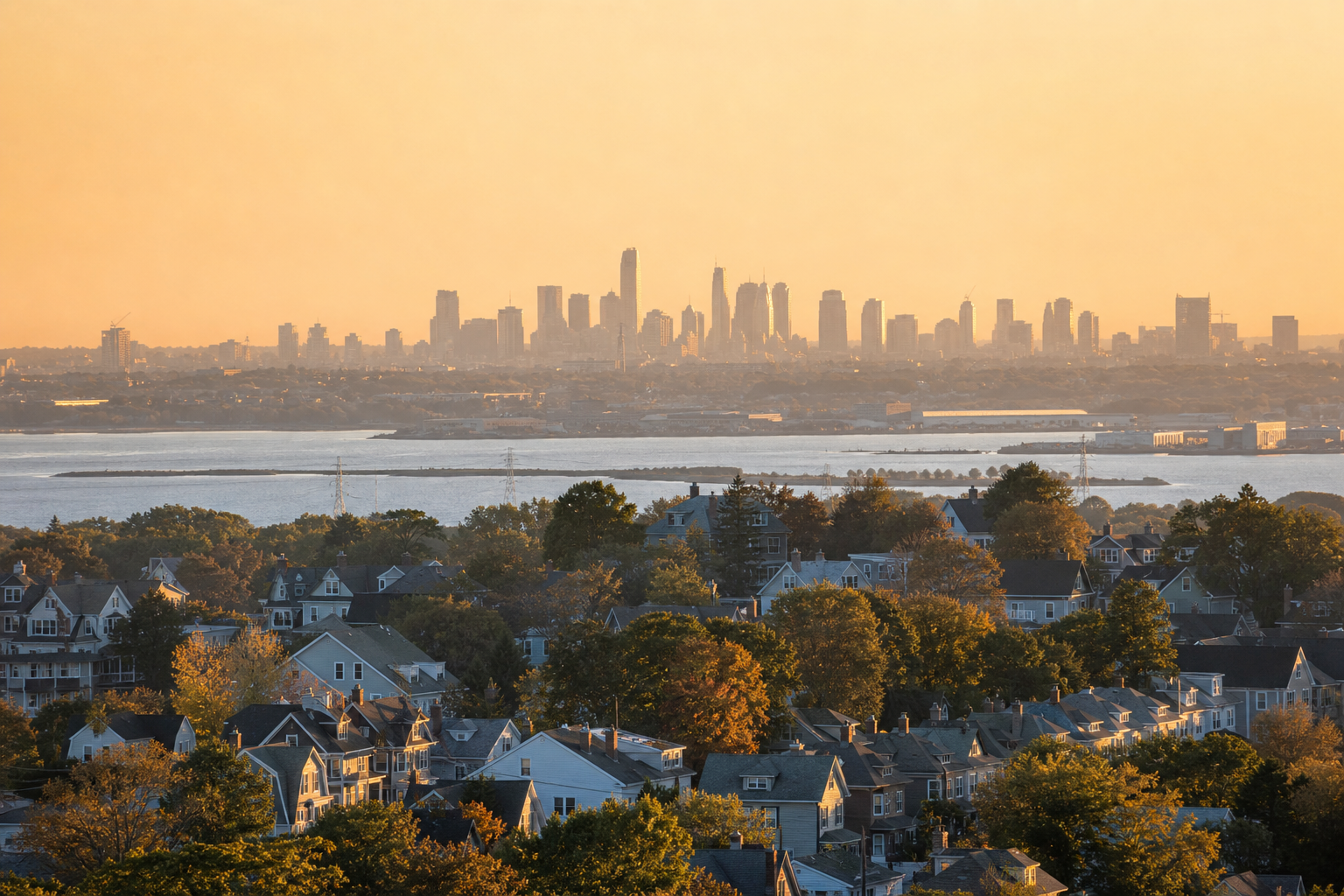
Quincy offers buyers a range of unique real estate options across 11 distinct neighborhoods, from transit-oriented condos near the Red Line to waterfront properties at Marina Bay and Wollaston Beach. With a median sale price of $675,000 and a median of 45 days on market, Quincy delivers Boston access at a more accessible price point.
What makes Quincy a strong real estate option for buyers in 2026?
Quincy offers unique real estate options that few Greater Boston communities can match: 11 distinct neighborhoods, a median sale price of $675,000, direct Red Line access to downtown Boston, and a genuine waterfront lifestyle along Wollaston Beach and Marina Bay. It consistently draws buyers who want urban convenience without paying Boston prices for it.
Key Takeaways
- Recent local market data puts Quincy's median sale price at $675,000, with a median of 45 days on market as of October 2026.
- Quincy has 11 named neighborhoods, according to the city's Housing Production Plan, giving buyers meaningfully different settings to compare within a single city.
- Active inventory stands at 165 homes for sale, with 107 new listings added in the past 30 days and 191 homes sold in the trailing 90 days, a market with real activity on both sides.
- Quincy's median sale price sits well below Newton ($1,550,000) and Charlestown ($1,015,000), while its median days on market reflects steady, competitive demand.
- The city's waterfront amenities, Squantum Point Park, Marina Bay, and Wollaston Beach, add a lifestyle dimension that most inland suburbs at this price point can't offer.
When buyers ask me about unique real estate options in Greater Boston, Quincy comes up in nearly every conversation. It's one of the few cities where you can genuinely choose your lifestyle setting, waterfront, transit-oriented, or quiet residential, without leaving city limits. I've helped clients find everything from a top-floor condo with marina views to a multi-family on a tree-lined street in West Quincy, and the range is real.
The market here isn't a secret. With 191 homes sold in the trailing 90 days and 107 new listings added in just the past month, Quincy moves. But it also rewards buyers who understand the neighborhood differences, because North Quincy and Squantum are not the same search.
How do Quincy's unique real estate options break down by neighborhood?
Quincy's 11 named neighborhoods, identified in the city's Housing Production Plan published by the Massachusetts Executive Office of Housing and Livable Communities, give buyers a structured way to think about what they actually want. That's unusual. Most cities at this size are one broad market; Quincy is closer to several markets layered inside one.
Transit-oriented neighborhoods
North Quincy, Wollaston, Quincy Center, and Quincy Adams all sit along the MBTA Red Line, which runs directly into downtown Boston. For commuters, this is a meaningful cost-of-living calculation: a shorter commute time from a city that prices below Boston proper. Condos and smaller multi-families dominate near the stations, but single-family inventory exists a few blocks out.
Waterfront and coastal neighborhoods
Squantum, Adams Shore, Quincy Point, and the Marina Bay area offer a coastal lifestyle that surprises buyers who think of Quincy as purely a transit story. Quincy's visitor guide from the Massachusetts Office of Travel and Tourism describes Marina Bay as a mixed-use waterfront development with restaurants, a marina, boardwalk access, and views toward Boston. Wollaston Beach and Squantum Point Park add additional shoreline options. Buyers considering waterfront properties should evaluate flood exposure, parking, and seasonal conditions at the parcel level, those details vary more than the zip code suggests.
Residential and quieter pockets
West Quincy and Wollaston Hill tend to attract buyers looking for more traditional single-family settings with larger lots and less foot traffic. These neighborhoods sit farther from the Red Line stations but offer a different pace. Every situation is different, and the only way to know which neighborhood fits your priorities is to walk them with someone who knows the city well.
What does the Quincy market look like compared to nearby areas?
Quincy's median sale price of $675,000 positions it as one of the more accessible markets with direct Boston transit access in Greater Boston. The table below shows how it compares to other areas I work across the region, using recent local market data from the trailing 90 days as of October 2026.
| Area | Median Sale Price | Median Days on Market |
|---|---|---|
| Charlestown | $1,015,000 | 61 |
| Dorchester | $620,000 | 33 |
| Hyde Park | $618,000 | 59 |
| Roslindale | $730,000 | 69 |
| Mattapan | $519,500 | 54 |
| Quincy | $715,000 | 31 |
| Newton | $1,550,000 | 34 |
A few things stand out here. Quincy's median days on market (31 in this table, drawn from the same trailing-90-day dataset) reflects a market that moves quickly when priced well. It clears faster than Charlestown, Roslindale, and Hyde Park. And at $715,000 in the area comparison table, it sits well below Newton and Charlestown while offering comparable or better transit access for many buyers.
The Greater Boston inventory picture has been shifting in 2026. A September 2026 report citing Massachusetts Association of REALTORS® data showed new listings statewide increased 9.4% year over year in July 2026, and combined active single-family and condominium listings in Greater Boston increased 15.2% year over year for the four weeks ending August 23, 2026. More inventory means more choices, but it also means buyers need to move decisively when the right property appears. Quincy's 45-day median tells you competition is real.
If you're weighing Quincy against other South Shore or metro options, I'd also recommend reading about South Coast Rail's impact on Quincy real estate, the infrastructure picture here has been changing in ways that matter for long-term value.
What's it like to live in Quincy day to day?
The lifestyle case for Quincy goes well beyond the commute math. The city has 52 municipal park locations, with facilities ranging from basketball and tennis courts to baseball diamonds, soccer and lacrosse fields, playgrounds, and a skatepark. That's a meaningful recreational infrastructure for a city of Quincy's size.
The waterfront layer adds something that's genuinely hard to replicate at this price point. Wollaston Beach is a real beach, not a park with a water view, and Squantum Point Park sits at the tip of the peninsula with open water on three sides. Marina Bay brings a different energy: waterfront dining, boat slips, a boardwalk, and a residential community that feels more like a destination than a suburb.
None of this means every property in Quincy is the right fit. The city's range is its strength, but it also means your search needs to be specific. A condo two blocks from North Quincy station and a single-family on Adams Shore are both in Quincy, they're not the same purchase decision, and they won't perform the same way over time. Your specific situation depends on your priorities, timeline, and what the market looks like on the day you're ready to move. That's where a local market analysis becomes the actual starting point.
For buyers navigating a competitive offer environment, I'd also point you toward how to win in a competitive Greater Boston market, the same dynamics that apply citywide show up in Quincy too.
FAQ
Which Quincy neighborhoods have the best MBTA Red Line access?
North Quincy, Wollaston, Quincy Center, and Quincy Adams all have Red Line stations, making them the most transit-connected neighborhoods in the city. Travel time to downtown Boston varies by station and time of day, but the Red Line runs directly into the core of the city without a transfer, which is a meaningful advantage for daily commuters.
Is Quincy a good alternative to living in Boston?
For many buyers, yes, Quincy offers direct Red Line access to downtown Boston with a median sale price well below most Boston neighborhoods, giving buyers more space and more property-type options for their budget. The tradeoff is that you're in a separate city, which means different municipal services, taxes, and a commute rather than a walk to work, so it depends entirely on your priorities.
What types of homes are available in Quincy, Massachusetts?
Quincy's market includes condominiums, townhouses, single-family homes, and multi-family properties, with the mix varying significantly by neighborhood. Transit-oriented areas near the Red Line stations tend to have more condo and multi-family inventory, while neighborhoods like West Quincy and Wollaston Hill lean more toward single-family homes on larger lots.
Which Quincy neighborhoods are closest to the waterfront?
Squantum, Adams Shore, Quincy Point, and the Marina Bay area are the neighborhoods with the most direct waterfront access, according to the city's Housing Production Plan and local amenity data. Wollaston also sits close to Wollaston Beach, and buyers interested in waterfront properties should evaluate each parcel individually for flood exposure, parking, and access conditions.
How long does it take to travel from Quincy to downtown Boston?
Red Line travel time from Quincy Center to Downtown Crossing runs approximately 20 to 30 minutes depending on the station and time of day, according to MBTA schedule data. Driving times vary considerably with traffic, and the commute experience differs meaningfully between stations, so it's worth testing the actual commute from a specific neighborhood before committing to a purchase.
What is it like to live near Marina Bay or Wollaston Beach?
Marina Bay offers a walkable waterfront setting with restaurants, a marina, boardwalk access, and views toward Boston, it functions more like a self-contained waterfront community than a traditional neighborhood. Wollaston Beach is a public beach with a broad shoreline, and the surrounding streets have a residential feel; buyers near either area should confirm parcel-level details like flood zone status and seasonal parking conditions before making an offer.
Quincy's combination of transit access, waterfront amenities, diverse housing stock, and a median sale price that sits below many comparable Greater Boston markets makes it one of the more compelling searches I run for buyers in 2026. The city rewards buyers who go in with a clear picture of which neighborhood setting fits their life, and that's exactly the kind of conversation I have with every client before we start looking.
If you're ready to explore what Quincy has to offer, reach out to schedule a consultation and I'll walk you through the neighborhoods, the current inventory, and what your budget can realistically get you here.
Equal Housing Opportunity. This article is general information only and is not legal, tax, or financial advice; confirm your own numbers with your closing agent, tax advisor, or lender.
Check out this article next